What Happens During a Sinus Evaluation With an ENT in Live Oak, TX
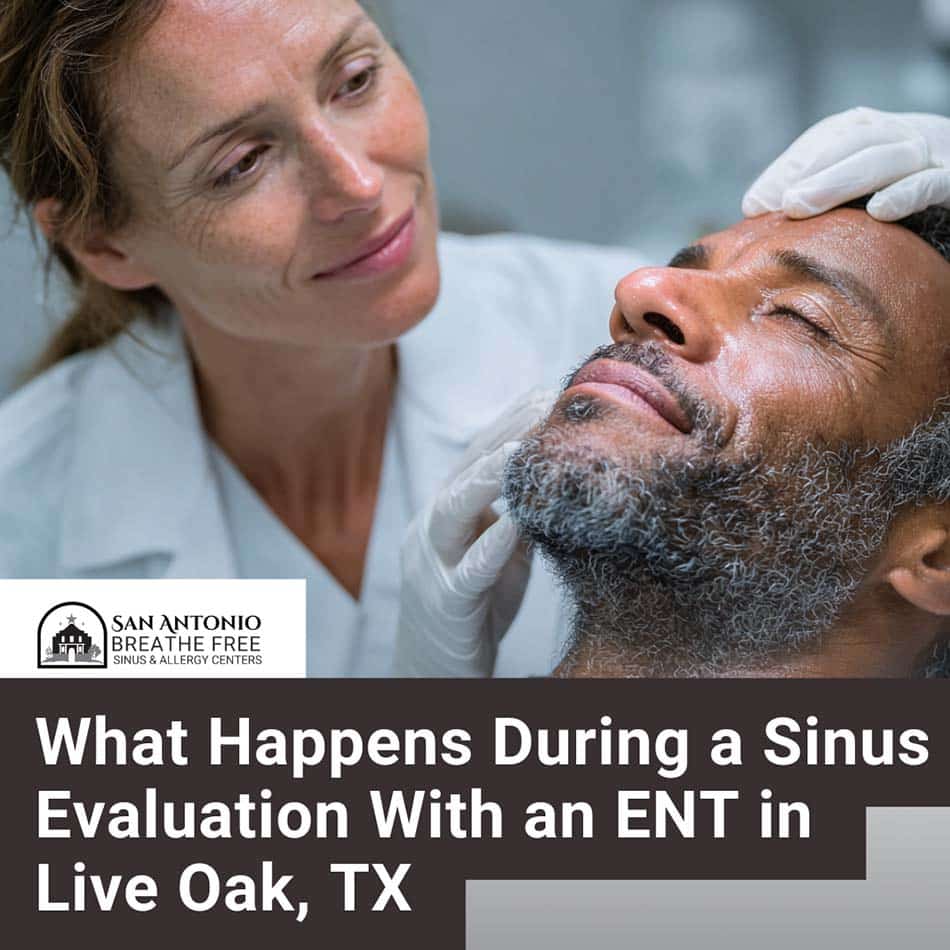
If you’ve been experiencing persistent sinus issues such as nasal congestion, breathing difficulties, postnasal drip, and sinus pressure, your primary care physician may refer you to an ENT doctor in Live Oak, TX, for further testing and evaluation of your sinuses.
A specialized ENT evaluation can be nerve-racking, especially if you don’t know what it entails. Let’s review what happens at these evaluations, so you can have an idea of what to expect during your ENT consultation.
What You Can Expect During a Sinus Evaluation With an ENT Specialist in Live Oak, TX
Knowing what to expect during your ENT consultation, whether it’s your first or follow-up visit, may help you feel more prepared for the visit and understand the evaluation process.
Here’s what you can expect during an ENT visit for a sinus evaluation in Live Oak, TX:
1. Your ENT doctor will review your medical history
During your ENT consultation, your physician will begin by thoroughly reviewing your current symptoms and medical history.
They will ask about the symptoms you’re currently experiencing, including the severity and how long they’ve been occurring. They will also ask about any relevant medical information, such as past or current medical conditions, allergies, medications, and past surgeries or treatments.
For a smoother flow, it would be wise to prepare all this information ahead of your scheduled appointment.
2. Your ENT doctor will perform a physical examination of your sinuses
Then, your ear, nose, and throat doctor in Live Oak, TX, will perform a detailed physical examination of your sinuses. They will check for swelling, irritation, or infection of the sinuses. Your ENT doctor may perform a physical examination of your sinuses via a range of procedures, which may include:
✅ Nasal endoscopy
What is nasal endoscopy?
Nasal endoscopy is a procedure that allows your ENT care provider to look into and examine the inside of your sinuses and nasal cavity. It uses an instrument called an endoscope, which is a thin and flexible tube with a tiny light and camera on one end, to enter the nose and provide images and video projected onto a screen.
When do I need a nasal endoscopy?
Your ENT doctor may use nasal endoscopy if they need to look at the inside of your nose and sinuses for further evaluation. It can be used if there are persistent problems, such as:
- Nasal congestion
- Nasal polyps
- Nosebleeds
- Sinus headaches
- Facial pain and tenderness (especially around the sinuses and above the eyes)
- Sinus infection
- Anosmia, or the loss of the sense of smell
How do I prepare for a nasal endoscopy?
Generally, you won’t have to make special preparations before a nasal endoscopy in Live Oak, TX. Your healthcare provider will walk you through any preparations before the procedure. This may include stopping certain medications, such as blood thinners, before the procedure. However, this may vary and is not always the case, so be sure to communicate with your provider.
What happens during a nasal endoscopy?
Nasal endoscopy is an outpatient procedure that usually takes just about one to five minutes. You’ll be awake and will probably sit upright for the procedure. Here’s what you can expect during the procedure:
- Your doctor will use a topical decongestant to reduce swelling and open up your nasal passages.
- Then, they will spray a numbing medication into your nose to numb the area for treatment.
- They will gently insert a thin, flexible endoscope into your nostril to examine your nasal passages and sinus openings
- Then, they will view and examine your nasal and sinus passages and check for any abnormalities.
- If needed, your doctor may remove a tissue sample for biopsy.
- Then, they will repeat this on the other side. They may need to do a few passes of the scope to get the information they need.
What happens after a nasal endoscopy?
Nasal endoscopy is generally well-tolerated, but some patients may feel mild discomfort during the procedure. There might also be lingering numbness after the procedure.
Most patients can typically return home shortly after the procedure and resume normal activities.
Side effects may include slight soreness in your nose and throat and mild nosebleeds. These usually go away on their own in a couple of days.
✅Allergy testing
What is allergy testing?
Allergy testing is a diagnostic procedure used to help identify substances (known as allergens) that may be triggering allergy symptoms. This is done in a controlled setting.
The types of allergy testing include:
- Skin prick test
- Intradermal skin test
- Blood (IgE) test
When do I need allergy testing?
Your ENT specialist in Live Oak, TX, may perform an allergy test if they believe that your symptoms are caused by allergies
Common allergy symptoms include:
- Nasal congestion
- Frequent sneezing
- Runny nose with thin and watery discharge
- Itchy and watery eyes
- Coughing
- Wheezing
- Skin rash
Common allergens include:
- Pollen
- Dust mites
- Mold
- Pet dander
- Insects and insect venom
- Certain foods
- Certain medications
How do I prepare for allergy testing?
Generally, you may have to stop taking allergy medications, such as antihistamines, three to seven days before your allergy test, as these medications may reduce your immune system’s allergic response, which could affect the accuracy of the test results. Your doctor should walk you through preparing for your allergy test.
What happens during allergy testing?
What you can expect during the allergy test will vary depending on the type of test performed.
For skin tests, some patients may develop a small reaction at the test site if they are sensitive to a specific allergen. Reactions typically fade within a few hours, though this may vary per individual. A blood allergy test only involves getting a blood sample, which is then sent to a lab for testing.
What happens after allergy testing?
After allergy skin testing, you may feel itchy, swollen, or sore. This is normal during testing, and this is why this type of test is done inside a controlled environment. Your doctor will give you instructions on what to do should you experience intense symptoms after the test.
3. Your ENT doctor will discuss treatment and follow-up care
After a sinus evaluation in Live Oak, TX, your ENT doctor will discuss your clinical findings and recommend treatment options and management strategies, which may include:
- Medications–such as allergy medication, antihistamines, nasal sprays, decongestants, and pain relievers
- Home remedies
- Lifestyle changes
- Surgical procedures, in some cases
They will also discuss follow-up care and appointments to monitor your condition and response to treatment.
Conclusion: Know What to Expect During Your ENT Appointment in Live Oak, TX
This is presented by San Antonio Breathe Free for educational purposes only and is not intended for professional medical advice, diagnosis, or treatment.
San Antonio Breathe Free is an ENT clinic serving the residents of Live Oak, Selma, Universal City, and the greater San Antonio area. Patients who wish to learn more about our clinic, specialties, and services can visit and explore our website.