At San Antonio Breathe Free, we specialize in treating your deviated septum and providing relief for congestion and breathing difficulties that come along with it. A deviated septum impacts a patient’s ability to breathe and can quickly decrease one’s quality of life. Our personalized treatment plans and minimally invasive procedures are designed to support a smoother recovery, so you can work toward breathing more comfortably and improving your quality of life. Schedule a consultation with our team today and let’s start your journey back to optimal sinus health.


DEVIATED SEPTUM TREATMENT IN SAN ANTONIO, TEXAS
We Specialize In Septum Deviation
WHAT IS A DEVIATED SEPTUM?
A deviated septum is an anatomical variation in which the thin wall separating the nostrils into left and right sides—known as the septum—is shifted to one side when it should be at the center. It’s a common condition and can be present at birth or develop later as a result of trauma or injury to the nasal area.
A deviated septum can lead to many health concerns including breathing difficulties, nasal obstruction, snoring, and an increased risk of sinus infections. It will manifest in varying degrees of symptoms, depending on the severity of the deviation. A consultation with a specialist will help determine the appropriate treatment plan.
WHAT CAUSES A DEVIATED SEPTUM?
A deviated septum can result from a variety of causes:
- Congenital Displacement: Someone can develop a deviated septum from birth, often occurring during fetal development.
- Trauma or Injury: A trauma or injury to the nose can also lead to a deviated septum. Some people who develop a deviated septum later in life may be a result of this.
- Age-Related Causes: Aging can cause changes in nasal structures and can lead to a deviated septum much later in life.
WHAT ARE THE SYMPTOMS OF A DEVIATED SEPTUM?
A deviated septum can contribute to a variety of symptoms that may affect nasal function and overall well-being. These symptoms include:
- Nasal Congestion: A deviated septum can cause breathing difficulties brought about by nasal congestion. Breathing through one or both nostrils can be challenging and the patient may find it difficult to maintain clear nasal passages.
- Snoring and Sleep Disturbances: A deviated septum can cause disrupted nasal airflow. This often results in snoring and can cause sleep disturbances for the patient and the people around them.
- Recurring Sinus Infections: Disrupted airflow and chronic nasal congestion can lead to recurring sinus inflammation and congestion, making the patient more susceptible to sinus infections.
HOW IS A DEVIATED SEPTUM DIAGNOSED AND TREATED?
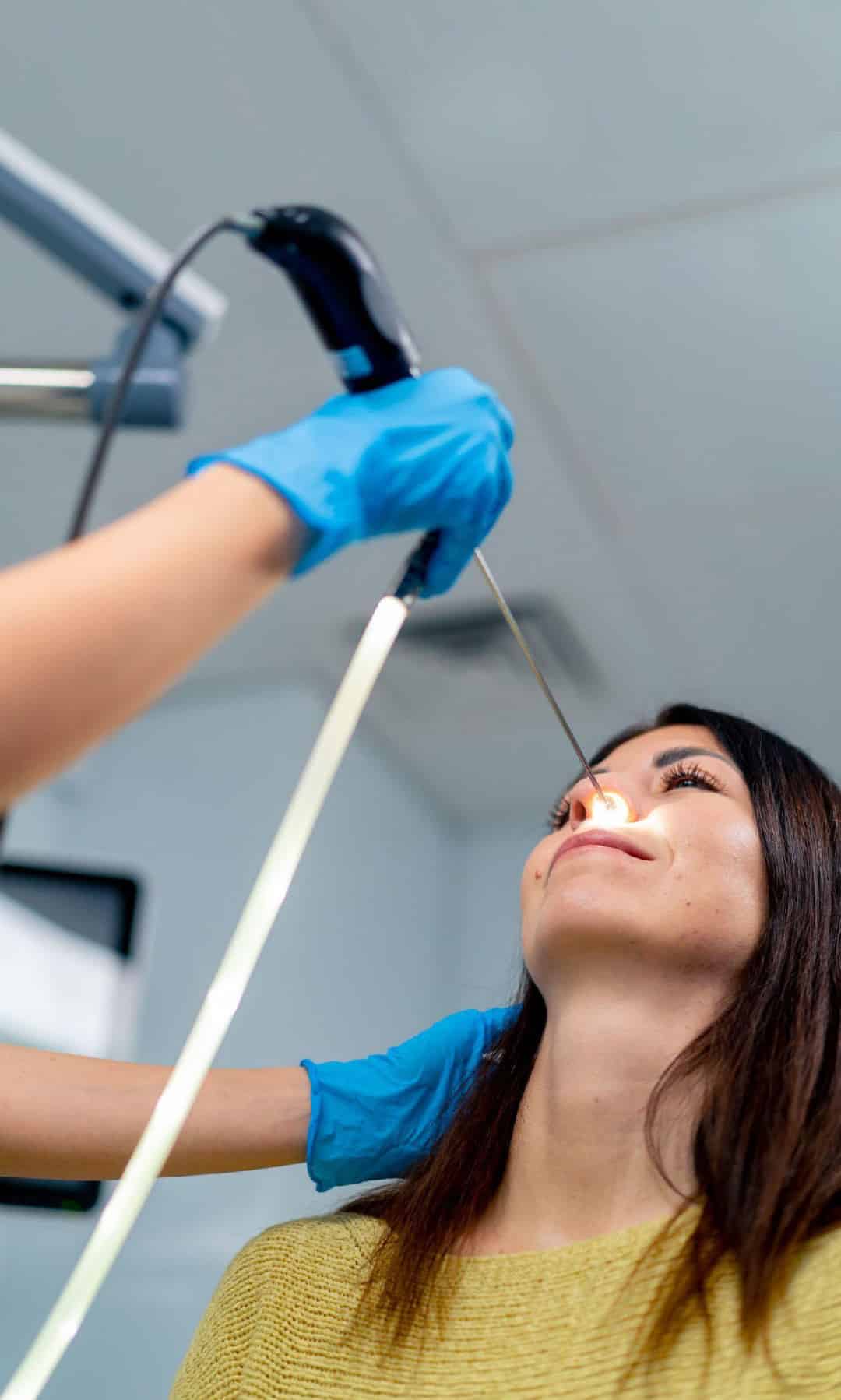
A consultation with an ENT doctor can help you get a deviated septum diagnosis. A specialist will use an instrument called a nasal endoscope to examine the nasal passages. A proper deviated septum diagnosis will also involve reviewing the patient’s medical history and assessing the severity of symptoms. This allows the care provider to offer appropriate advice on the right course of treatment.
Typically, mild cases of deviated septum will find medications like decongestants and nasal corticosteroid sprays beneficial. These help alleviate symptoms and offer relief.
However, severe cases of deviated septum will need a more aggressive approach. If your condition calls for it, your doctor might recommend septoplasty surgery. This procedure will correct the deviation and restore it to the center of the nose. This improves airflow, breathing, and mucus drainage.
Deviated Septum: Diagnosis and Treatment
An ENT specialist has the expertise and knowledge to assess and diagnose a deviated septum. An instrument called a nasal endoscope is usually inserted into the patient’s nasal passages and used to assess them. Your care provider will examine the severity of your symptoms and medical history to tailor a personalized treatment plan for you.
Mild cases can be managed with medications like nasal sprays and decongestants. However, severe cases may require surgical intervention, such as septoplasty.
Septoplasty is a minimally invasive procedure that aims to straighten the nasal septum and position it back to its anatomically correct position in the center of the nose. Septoplasty is a proven surgical option designed to improve airflow and make breathing easier by correcting structural issues in the nose.
WHAT TO EXPECT FROM A DEVIATED SEPTUM SURGERY?
Septoplasty, also known as deviated septum surgery, is a minimally invasive outpatient procedure used to straighten a misaligned nasal septum and improve airflow through the nose. Typically lasting one to two hours, the surgery involves making an incision inside the nose to reposition the septum closer to the center. This adjustment is intended to help reduce nasal obstruction and relieve symptoms such as congestion or difficulty breathing.
Recovery times can differ depending on the patient. Temporary side effects such as swelling, bruising, or nasal congestion are common in the initial healing period. As recovery progresses, patients often experience improved nasal airflow and breathing comfort.
GET IN TOUCH WITH SAN ANTONIO BREATHE FREE TODAY
At San Antonio Breathe Free, our team is committed to helping our patients breathe freely and regain control of their lives. We use our team’s expertise to construct a personalized treatment plan that address the deviated septum while considering your unique needs and lifestyle. Get in touch with us today for a consultation and let’s start you on your journey towards more comfortable breathing!

Individual results may vary. Information on this website is for educational purposes only and is not a substitute for professional medical advice, diagnosis, or treatment. In the event of a medical emergency, call 911.