Signs Your Sinus Symptoms May Require Specialist Care
Sinus symptoms are common and can sometimes be managed at home. Congestion, facial pressure, postnasal drip, or a blocked nose may come and go, especially during seasonal changes or minor illnesses. However, when these symptoms persist or begin to interfere with daily life, it may be appropriate to consider further evaluation.
While occasional sinus discomfort is often temporary, certain patterns may indicate that a more detailed assessment is needed. Understanding when symptoms go beyond typical irritation can help guide your next steps. At San Antonio Breathe Free, patients often ask how to tell when sinus symptoms may require evaluation by an ear, nose, and throat (ENT) specialist.
Why Sinus Symptoms Can Persist
The sinuses are air-filled spaces that produce mucus to help trap dust, allergens, and other particles. Under normal conditions, mucus drains through small openings into the nasal passages.
When the lining of the sinuses becomes inflamed, these drainage pathways may narrow or become blocked. This can lead to a buildup of mucus and increased pressure.
Several factors may contribute to ongoing sinus symptoms, including:
- Allergies
- Recurrent infections
- Environmental irritants
- Structural differences inside the nose
- Nasal polyps
Because multiple factors may be involved, persistent symptoms may benefit from a more detailed evaluation.
1. Symptoms That Last Longer Than Expected
Sinus symptoms related to a cold or mild irritation often improve within a couple of weeks. When symptoms continue beyond that timeframe, it may suggest that additional factors are involved.
Examples include:
- Ongoing nasal congestion
- Facial pressure or fullness
- Thick nasal drainage
- Postnasal drip
If symptoms persist for several weeks or longer, an ENT evaluation may help determine possible underlying causes.
2. Symptoms That Recur Frequently
Some individuals experience cycles of sinus symptoms that improve and then return. Recurrent symptoms may indicate that the underlying issue has not been fully addressed.
This may include:
- Repeated sinus infections
- Temporary relief followed by symptom return
- Frequent need for medications
Identifying patterns over time may help guide further evaluation and management options.
3. Increasing Facial Pressure or Discomfort
Facial pressure around the eyes, cheeks, or forehead may occur when sinus drainage is limited. While mild discomfort can be temporary, persistent or worsening pressure may warrant further attention.
Patients may notice:
- Pressure that worsens when bending forward
- Tenderness in the face
- Headaches associated with sinus symptoms
An evaluation may help determine whether inflammation, blockage, or another factor is contributing to these symptoms.
4. Difficulty Breathing Through the Nose
Ongoing difficulty breathing through the nose can affect sleep quality, physical activity, and overall comfort.
Possible contributing factors may include:
- Swelling inside the nasal passages
- Structural differences such as a deviated septum
- Nasal polyps
An ENT specialist may assess airflow and identify potential causes based on clinical findings.
5. Reduced Sense of Smell or Taste
Changes in smell or taste can sometimes occur with sinus inflammation. While temporary changes may happen during illness, longer-lasting symptoms may suggest ongoing sinus involvement.
Patients may experience:
- Reduced ability to smell
- Changes in taste perception
- Persistent dullness in sensory function
Further evaluation may help determine whether inflammation or obstruction is affecting these senses.
6. Symptoms That Affect Sleep or Daily Activities
Sinus symptoms can impact more than physical comfort. They may also affect sleep, concentration, and daily routines.
This may include:
- Difficulty sleeping due to congestion
- Daytime fatigue
- Reduced ability to focus
When symptoms begin to interfere with daily life, it may be appropriate to explore additional evaluation options.
7. Limited Improvement With Initial Treatments
Many patients try treatments such as nasal sprays, antihistamines, or decongestants. While these may provide relief in some cases, they may not fully address symptoms if other factors are involved.
Consider further evaluation if symptoms:
- Do not improve with standard treatments
- Return after stopping medication
- Require repeated courses of care
An ENT specialist may help assess whether additional approaches should be considered.
What an ENT Evaluation May Involve
If sinus symptoms persist, an ENT evaluation may help clarify what is contributing to the condition.
This may include:
- Reviewing symptoms and medical history
- Examining the ears, nose, and throat
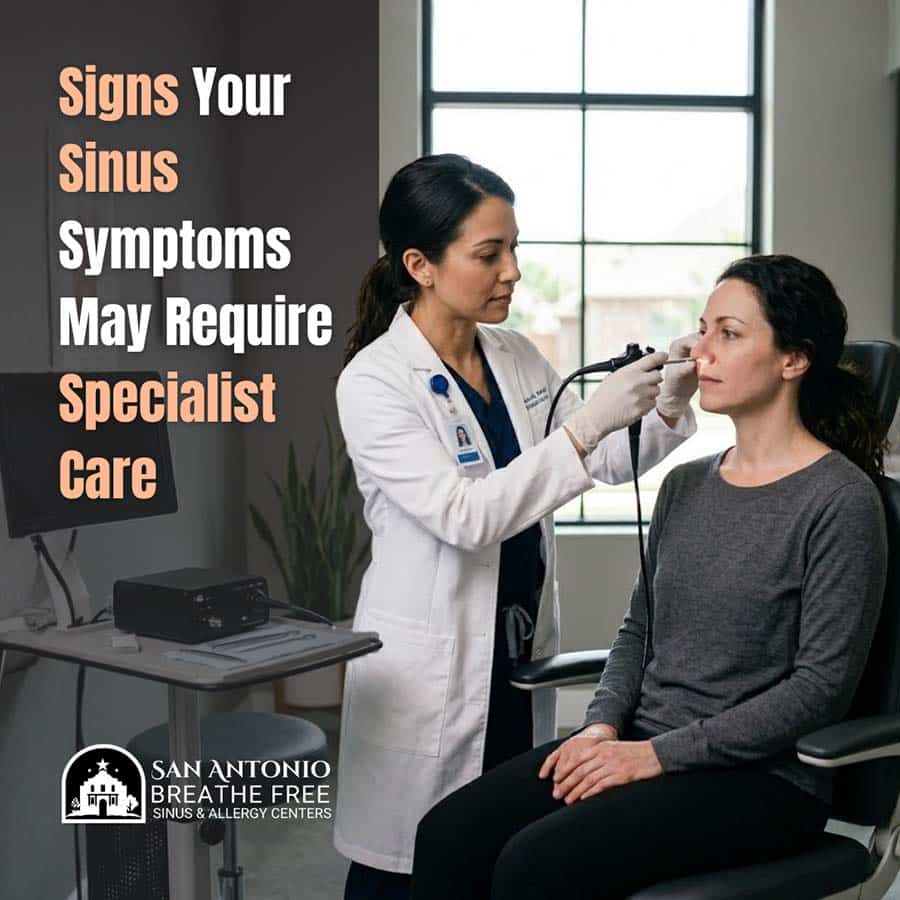
- Using a small camera (nasal endoscopy) when appropriate
- Discussing whether imaging or additional testing may be helpful
The purpose of the evaluation is to better understand the source of symptoms and discuss appropriate next steps based on individual findings.
Taking a Thoughtful Approach to Sinus Care
Not all sinus symptoms require specialist care. However, persistent, recurring, or disruptive symptoms may benefit from a more detailed assessment.
Because each patient’s anatomy, history, and symptoms are different, care decisions are typically based on individual evaluation rather than a one-size-fits-all approach.
Scheduling an ENT Evaluation in San Antonio
If sinus pressure, congestion, or recurring symptoms are affecting your comfort or daily routine, an evaluation with an ENT specialist may help identify possible contributing factors.
At San Antonio Breathe Free, physicians evaluate sinus, allergy, and airway concerns using clinical examination and, when appropriate, diagnostic tools. Treatment recommendations are based on individual findings, and not every patient is a candidate for every option.
Taking time to ask questions and understand your symptoms can help you feel more informed about your care. To learn more, you can schedule an appointment with San Antonio Breathe Free to discuss your concerns and explore available options.