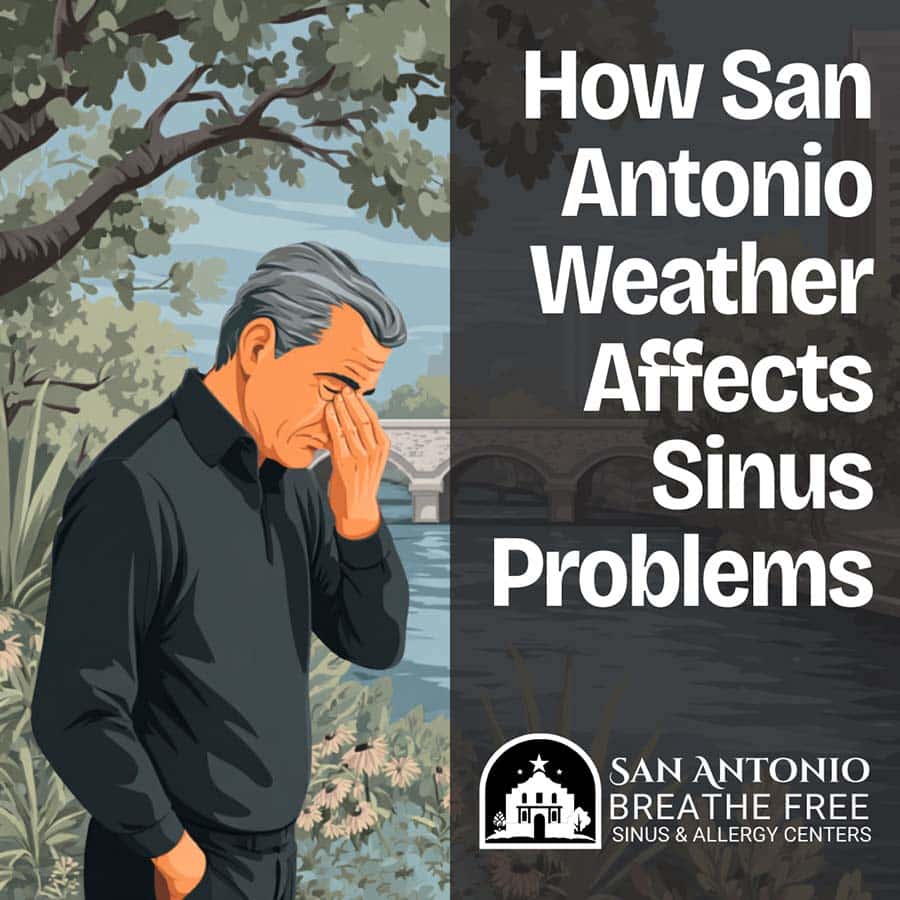
How San Antonio Weather Affects Sinus Problems
San Antonio is widely known for its beautiful landscapes, lively culture, rich colonial heritage, and warm weather. While the relatively mild and warm weather almost all year-round sounds appealing, there may be several environmental factors that could affect overall sinus health and comfort.
An ENT doctor in San Antonio, TX, can help assess your symptoms and discuss potential weather and environmental factors that are affecting or worsening your sinus problems.
How San Antonio’s Weather Affects the Sinuses
Several weather and environmental factors may affect overall sinus health and comfort:
☑️ Extreme humidity levels
Located in South Texas, San Antonio is relatively humid. Residents experience very hot and humid summers with mild winters.
By now, many people already know that extreme humidity levels–excess moisture or dryness in the air–can significantly impact the sinuses.
High humidity levels and excess moisture in the air can promote mold growth. Mold releases spores that, when inhaled, can trigger sinus irritation and inflammation. Sensitive individuals may experience mucus buildup, breathing difficulties, and sinus pressure.
On the other hand, extremely dry air and the lack of moisture can dry and irritate the sinuses. This may contribute to discomfort, nasal dryness, nosebleeds, or worsening sinus symptoms.
☑️ Temperature shifts
While Texas has relatively mild weather conditions almost all year-round, temperature shifts and fluctuations are still inevitable throughout the year.
Constant temperature changes (such as going from a cool environment to a warm environment) can cause the rapid swelling or constriction of the blood vessels in the nose and sinuses. In some cases, this may contribute to stress in the sinuses, which may potentially cause irritation, swelling, and inflammation.
☑️ Changes in air pressure
When air pressure in the environment changes, the air pressure inside the sinus cavities may fall out of sync. This could create an imbalance in the internal and external air pressure and cause a feeling of tightness, pressure, or even pain in the sinus cavities. This feeling of tightness or pressure can even radiate to the nearby areas, such as around the nose, cheeks, eyes, forehead, jaw, and teeth.
☑️ Allergy season across Texas
Because of its relatively warm weather all year round, allergy season in Texas is generally longer than in other states that experience all four seasons in full force. Common allergens such as pollen, dust mites, mold spores, and pet dander can cause issues at any time of the year, depending on your triggers.
Let’s take a quick look at San Antonio’s allergy calendar:
- The spring season in Texas is tree allergen season, with the main culprits being oak, elm, pecan, cottonwood, and ash trees.
- During the summer season, grasses like Bermuda, sweet vernal, and timothy are the major contributors to allergy flare-ups and several other sinus issues.
- As with most states across the country, ragweed pollen is the dominant allergen and trigger during the fall season in Texas. Because ragweed pollen is light, it can travel and spread all over the state, even if you don’t necessarily live near it.
- Some allergy sufferers may enjoy a quick respite from their allergies during the winter season in Texas. However, residents who are allergic to cedar should be wary, as cedar trees begin pollination during this time of year, which can cause symptoms of cedar fever in many residents.
☑️ The air quality in San Antonio
San Antonio and the rest of Texas have varying air quality. Several airborne irritants, such as pollution, smoke, smog, and strong scents and odors, can travel in the air and, when inhaled, can trigger sinus irritation and inflammation, which can cause or worsen nasal congestion, breathing difficulties, and sinus pressure in some sensitive individuals.
How You Can Manage and Navigate Sinus Problems in San Antonio, TX
- Keep yourself hydrated throughout the day: Drink plenty of water to stay hydrated. This may help promote normal mucus consistency, flow, and drainage. Some individuals may also consider limiting their intake of dehydrating beverages, such as caffeine and alcohol, if these appear to worsen symptoms.
- Monitor and control indoor humidity levels: Keep an eye on humidity levels in your home, especially in your bedroom during sleep. Keep humidity at comfortable levels, usually between 30% to 50%. Depending on the current situation in your home, you can run either a humidifier (for excess dryness) or a dehumidifier (for excess moisture) to combat extreme humidity levels.
- Minimize your exposure to allergens and triggers: Stay on top of your allergies by always starting your day by checking allergen and pollen forecasts. If you have to go out during high pollen and windy days, make sure to wear a protective facemask to minimize your exposure to potential triggers.
- Try over-the-counter medications to manage symptoms: Some individuals may find some temporary relief from medications such as decongestants, antihistamines, saline nasal sprays, and pain relievers. Consult with your doctor to determine if medications may be appropriate for your sinus problems.
Frequently Asked Questions About Sinus Problems in San Antonio, TX
What does an ENT in San Antonio, TX, treat?
An otolaryngologist, simply referred to as an ENT, diagnoses and treats issues and conditions affecting the ears, nose, throat, neck, and related facial structures.
Common conditions that they may treat and address include:
- Allergies
- Sinusitis
- Ear infections
- Hearing disorders
- Persistent sore or scratchy throat and other throat concerns
- Dizziness, vertigo, and other balance issues
- Severe snoring, sleep apnea, and other sleep-related breathing disorders
Available ENT services vary by clinic and provider.
When is it time to see a sinus specialist in San Antonio?
Some sinus issues may resolve on their own with adequate rest, proper hydration, and some over-the-counter medications. However, you should consider scheduling an appointment with a sinus specialist if symptoms worsen or persist for longer than 10 days.
Moreover, seek prompt medical help if you experience severe symptoms, such as:
- Facial swelling
- High fever
- Stiff neck
- Vision changes
- Confusion
Do I need a referral to visit an ENT clinic in San Antonio, TX?
Referral requirements vary depending on your current health insurance plan. Before scheduling an ENT appointment, contact your insurance provider or the clinic’s billing office to confirm referral requirements for your current plan.
Conclusion: Understanding Weather and Sinus Issues With San Antonio Breathe Free
San Antonio Breathe Free provides ENT care services in San Antonio, Live Oak, Universal City, and the surrounding Bexar County communities. Get in touch with our team for more information about available ENT services near you.