Top Questions to Ask During Your First ENT Appointment
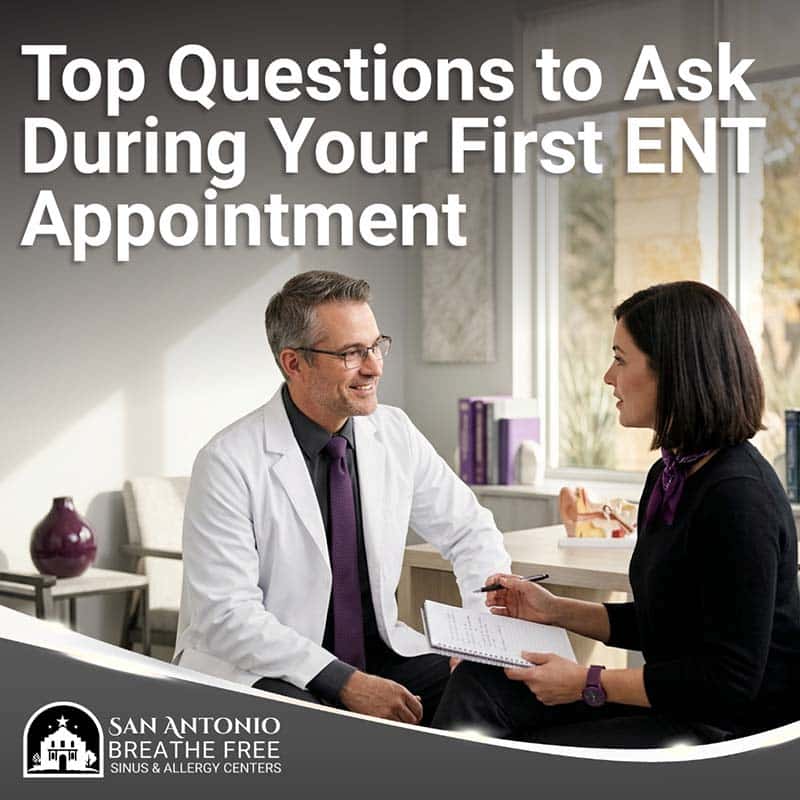
Living with ongoing sinus congestion, recurring ear infections, or a sore throat that never seems to completely go away can be frustrating. By the time many people schedule an appointment with an ear, nose, and throat (ENT) provider, they’ve often tried home remedies or waited for their symptoms to improve on their own.
At San Antonio Breathe Free Sinus & Allergy Centers, one of the most common things patients say after their first visit is that they wish they had known what questions to ask beforehand. Preparing a few key questions can help you get the most out of your appointment and leave with a clearer understanding of your health.
1. What Do You Think Is Causing My Symptoms?
Many ENT conditions share similar symptoms, which is why it’s important to understand the factors that may be contributing to your symptoms instead of focusing only on the discomfort.
For example, chronic nasal congestion could be related to allergies, recurring sinus inflammation, nasal polyps, or a structural issue inside the nose. Ear pressure may stem from allergies, sinus problems, or changes affecting the middle ear.
Ask your ENT:
- What condition do you think is causing my symptoms?
- Could more than one issue be involved?
- Are there environmental factors that may be contributing?
For many people in San Antonio and surrounding communities, seasonal pollen, cedar, mold, and changing weather patterns can all play a role in recurring ear, nose, and throat symptoms.
2. Will I Need Any Diagnostic Testing?
Not every patient requires additional testing, but diagnostic tools can provide valuable information when symptoms are persistent or recurring.
Depending on your concerns, your ENT may recommend allergy testing, a hearing evaluation, nasal endoscopy, or imaging to better understand what’s happening.
Consider asking:
- Why is this test recommended?
- What will it tell us?
- How will the results help guide my treatment plan?
Understanding the purpose behind testing can help you feel more comfortable with the next steps.
3. Could My Symptoms Be Connected?
Many people assume each symptom has a separate cause, but ENT conditions often overlap.
For instance, allergies can contribute to chronic sinus inflammation, while nasal congestion may lead to poor sleep, daytime fatigue, and even difficulty concentrating at work or school. Postnasal drip may explain both a lingering cough and frequent throat clearing.
Asking how your symptoms relate to one another can provide a better picture of your overall health.
4. What Are My Treatment Options?
Every patient is different, so treatment recommendations should reflect your specific diagnosis and goals.
Depending on what’s causing your symptoms, your ENT may discuss medical management, allergy care, or procedures such as balloon sinuplasty when appropriate.
You can ask:
- What options are available for my condition?
- Why do you recommend this approach?
- What should I expect moving forward?
These conversations help you make informed decisions about your care.
5. What Can I Do to Reduce Future Flare-Ups?
Managing ENT conditions isn’t only about treating symptoms when they appear. It’s also about identifying habits or environmental factors that may contribute to recurring problems.
Your provider may discuss ways to reduce exposure to common triggers, recognize early warning signs, or monitor symptoms throughout the year.
These practical tips can be just as valuable as your treatment plan.
How Do I Know It’s Time to Stop Waiting and Get Checked?
Occasional congestion or a sore throat isn’t always a reason to see an ENT. However, recurring or persistent symptoms deserve further evaluation.
It may be time to schedule an appointment if:
- Your symptoms last several weeks without improving.
- You experience repeated sinus or ear infections.
- Nasal congestion regularly affects your sleep.
- Allergy symptoms interfere with work, school, or outdoor activities.
- Hearing changes, dizziness, or ongoing throat discomfort don’t improve.
An ENT evaluation doesn’t automatically mean you’ll need a procedure. In many cases, it’s simply the best way to better understand the factors that may be contributing to your symptoms and discuss care options that fit your needs.
A Well-Prepared Appointment Can Lead to Better Answers
Your first ENT appointment is an opportunity to better understand your symptoms and ask questions about your health. The more you understand the factors that may be contributing to your concerns, the more confident you’ll feel when making decisions about your care.
At San Antonio Breathe Free Sinus & Allergy Centers, we’re committed to helping patients throughout San Antonio and nearby communities find answers to sinus, allergy, ear, nose, and throat concerns through personalized evaluations and patient-centered care.
Give San Antonio Breathe Free Sinus & Allergy Centers a call to schedule a consultation and learn more about what’s causing your symptoms.